.png?width=284&height=80&name=Penta_Logo_1CBD83%201%20(1).png)
 December 22, 2025
 Bryan DeAngelis
In this launch episode of What's at Stake, partner Andrea Christianson sits down with Penta colleagues Dan La Russo, Lauren Wolfson, and Lloyd Miller to debut Penta AI, the firm's new practice built to help organizations understand, anticipate, and act in an era reshaped by artificial intelligence.
Together, they unpack why Penta created this Practice, what makes its approach different, and how AI is transforming the way organizations manage reputation, govern emerging technologies, and scale their engagement strategies. They also preview some of the early tools coming out of Penta's Innovation & Build Lab, including work in agentic systems, synthetic message testing, and Penta's GenAI Reputation Audit. The conversation offers an inside look at how Penta is blending stakeholder intelligence, active learning systems, and applied AI to help leaders succeed in a rapidly shifting environment.
Transcript
Welcome back to What's at Stake, I'm Andrea Christianson, a partner of Penta and head of our AI practice on the East Coast, and I'm really excited about today's special episode. Last week, Penta officially launched its AI practice. This has been a labor of more than three years of testing, innovating, and building. Our AI practice brings together coders and builders, strategists and researchers to help clients understand and influence how AI is shaping their reputation today. This is all supported by Penta's in-house AI innovation and build lab. Today' I'm joined by three others who've been integral to building. this practice to talk about what we're doing and why it matters for companies all across America.
Dan LoRusso is based in San Francisco. He leads our practice on the West Coast. We also have Lloyd Miller, based here in Washington, DC with me. He is Penta's head of product and has been at the vanguard of innovative new applied AI tools. And we also have Lauren Wolfson, based in New York, who leads our research on messaging and audience perception, so everything from real-time analysis to survey and qualitative testing. Really excited to have this group together to talk about what's going on in AI. And we're gonna start with Lauren.
We felt the pace of change accelerate with AI over the last couple years, and you spend a lot of your time helping companies understand how to stay ahead of the game. Can you just start with an overview of what you're seeing in the landscape, what Penta's doing, and what companies should be thinking about? Yes. Thank you, Andrea.
Very happy to be here. We have been really seeing the evolution of this, both in terms of working with our clients, the big scalers, the players that are driving the pace of change that we are seeing, and it's really gone from being this amorphous technology a couple of years ago to now we're really in the early phase of adoption where some of the benefits are starting to be realized, and then some of the benefits are being challenged and questioned. And we are working to help our clients stay ahead of where this AI landscape is going, both from the perspective of how to talk about their story and their impact when it comes to AI, 'cause a lot of our clients are really at the forefront of doing this. Also understand what are some of the risks that are coming out with issues around AI, from job displacement to data centers to
AI slop, and things that are actually trust... are getting in the way of trust. And lastly, we are, as a company that is being disrupted by AI and an industry that is heavily being in- i- disrupted by AI, we have spent the past year plus really building tools to help our company at Penta' get ahead of this momentum and drive change, and are really excited to launch this practice where we're really bringing these tools and things that we've been doing to help our clients stay ahead and get ahead of the disruption that's happening. But what kind of tools, Lauren? Can you kinda go into some- Yeah. ... details there? Yeah. So one of the things that we're really excited about is synthetic audiences. And there's, there's a lot of benefit to be done from using this type of technology, which is essentially building a audience that's AI-based, an AI persona based on the data that we' already have from them. And a big part of what we do is what we call active intelligence, which is really helping our clients match the pace of how dynamic and complex and changing their environment is. And our active intelligence programs allows clients to be very nimble in how they understand issues in the landscape and identify ways to jump in. Synthetic audiences are a way to really enhance that, that almost muscle that clients can build to, to be very nimble in the sense of using these audiences to collaborate with, to understand what their reactions would be, to predict what stakeholder tensions might come up, and get insight and perspective without having to go do research.
Obviously there is going to be times where research is still needed, but then synthetics are a way to collaborate and a way to get hypothesis in a much more sophisticated way. And what's really cool about what we're doing and what we're building is a lot of the synthetics that are out there already are very static. You upload data, you train it, you prompt it, and maybe you're doing that periodically. The to- the way that we are approaching this is to have synthetics that are influenced by their feed. And what I mean by that is have a real-time pipeline of data that reflects what they're seeing in the news, what they're seeing on social media, what they're interacting with, so that when we build our synthetics and we're collaborating with them, they have recency bias in terms of how they are responding based on what their feed is. So this is just like something we're super excited about and has been awesome as we're developing messages, understanding what reactions are, and again, getting ahead of the disruption in our landscape.
So if you're a chief communication officer or a marketing person, could you then feed in messages or potential ad copy or whatever that might be into the synthetic audiences and get what you're saying is sort of a real-time reaction to test these without having to go create and do new research each time? Totally. And again, there will be times where it's not going to replace real people's reactions for dicey top, dicey scenarios, for when you don't have a good ch- set of training data. That, the need for insights and people is never going away, but in the moments where probably wouldn't have made sense to invest in research, this is something that is at our fingertips and very efficient and affordable to do. Dan, we've been collaborating on a lot of this with our clients and out of the West Coast, which is really the catalyst of where all this technology is coming from.
What's the vibe there? Do you feel like leaders in enterprise tech, B2B, in the different companies that are out there, are they seeing this moment as an opportunity, as a risk, as both, and what are the ways that we're helping there? Yeah. Thanks, Lauren.
I'm really excited to be here too. This is truly an exciting time to be in, not only communications, but technology and just business overall, right? There's a bit of a joke out here in the Bay Area that there's a- an AI event every night, and you could spend all of your time going to events just to learn and share stories and collaborate with other people, hearing what they're doing. And I've been lucky to go to handfulls of those events over the last few months. And every time I go, I feel both ahead of the curve and behind the curve. And what I mean by that is, you have companies who are fully immersed in AI, who are really pushing the edges of it, building organizations, structures, teams that are fully agentic and trying to push that future forward. And then you have other companies who are more established, large, think Fortune 500, maybe in like regulated industries, trying to figure out an ethical approach to doing this in a way that's governed, that delivers value and is like measurable and impactful, but thoughtful. Right? So you have these tensions in this world that's moving very, very quickly, and I think it's both, to your question, is it an opportunity or a risk, right? The opportunity is, wow, we can set our brand apart, our communications apart. We can find new ways to engage with our stakeholders and learn from them. The risk is, are we going too fast? Are we going too slow? Are we doing it appropriately for the goal and what we're trying to achieve?
So I think companies always feel like you're on those two ends of the spectrum, and I think one of the things we do nicely here is help them figure out their path and their journey for AI. Right? And I think that was one of the thoughtful ways we approached this practice and the development of it. So we're able to help teams that are putting agents into their org charts as team members to think thoughtfully about how you do that, and we're also able to help them build the new tools, the new approaches and the new strategies that they have to have so every team member within the organization feels empowered and understands how to use it appropriately. So, that's the exciting part right now, is learning everybody's on their journey. It's a little bit different for everybody, but understanding where they are and ultimately what they want to achieve with AI is the sweet spot. Lloyd, as we think about helping people along that journey, you spend a lot of time on new products, developing new solutions with clients. How do you kind of go about that? What are you seeing when you're talking with them about the innovations they're looking for, maybe the ones they haven't thought of yet?
We on the product te- we spend a lot of time thinking about human behavior and utility. How do people actually use these tools? As we've talked about, the pace of these innovations is coming every day, and so we just are trying to stay ahead of that and make sure that people are actually getting value out of that, and how these tools are actually changing human behavior in very real ways that a lot of the assumptions that we've made and systems that people have built over the last 20 years are just getting completely upended. A really good example of this is like after the launch of ChatGPT, there was just a seismic shift in just the way people get information.
So, whereas before people used to use Google, where SEO was king, now GPTs, even Google's own search are aggregating the results in a summary and giving people that response, where you now see even 60% of the time when someone does a Google search, they're not even clicking on a link. So the links are no longer becoming what matters and what's influencing companies' reputations. We're now seeing that far more being in the actual responses being surfaced by these GPTs.
So that forced us to adapt the way that we think about measuring reputation and risk through the lens of what those GPTs are saying about our clients and their issues to their stakeholders, which led us to create the GEO Index, which is our way of measuring how companies and brands and their issues are showing up in all of those generative engine environments, whether it's ChatGPT, Google's AI mode, or Gemini, or their search overviews, Claude, Perplexity, Grok on X, as a way to be able to just answer those questions.
And what we're looking at here is the ability to just track those changes of like what people are saying, what the drivers of that information, where are those GPTs sourcing that information, where, whether it's from the company's owned media, third parties, user-generated content, Reddit and Wikipedia, and LinkedIn being very popular sources for cor- for answers on corporations, as well as message alignment. How closely are those responses aligning to and the underlying sources aligning to companies' preferred messaging? And the sentiment of those responses, just being able to say is the tone of them in reflecting the tone that the companies would want. Uh, so we're being able to use that to identify gaps and opportunities of how companies can shift on both a macro level, their strategy approaching generative engines, but also on a very tactical level. How do you write content that is optimized for generative engines versus search engines, and how does that change your writing style, your approach, the volume of content that you produce, who you partner with, all of that in very real and practical ways? Now, Andrea, you and I have worked a lot on this.
I'm curious where your thinking is like where the biggest impacts are for companies when they're thinking about their generative engine strategies. Well, it's really interesting because I think that... As we think about the pace of change, right, there's things that are like today, right now you need to start doing and things you probably need to start thinking about. So if you haven't started using AI within your organization, you are behind the ball and you need to start figuring that out, right? One thing that I think every company needs to do in 2026 is develop, implement and have a regularly refined generative engine optimization strategy.
I mean, Lloyd, you were just kind of talking about SEO was king. Like, SEO is being disrupted, but SEO is not the same thing as GEO. And how...... companies need to think about engaging on that is what they need to be doing right now. Um, you kind of talked about how we're helping clients do that. We're helping them understand how are they showing up in these different large language models, and most importantly, what is driving the outputs? So when you get an answer, what sources are behind those? Is it your company website? Is it a media? Is it a Reddit thread? Like, these things really matter, understanding what's driving that and doing it at scale.
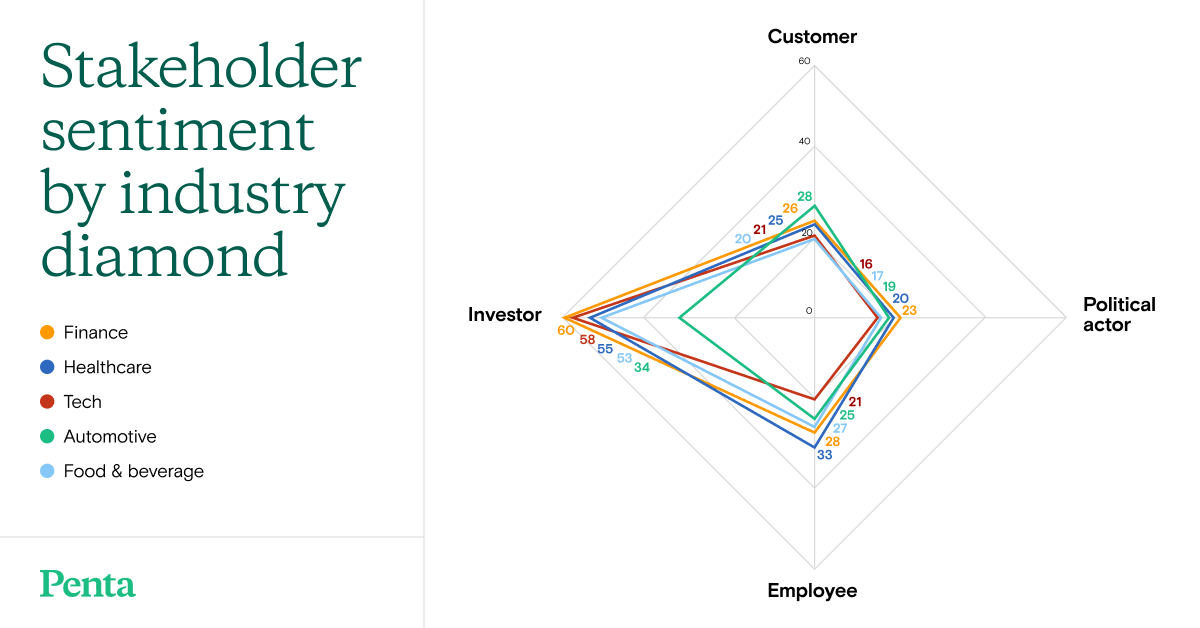
And so what we're able to do is be able to understand how these LLMs are portraying a organization's reputation or detailing an issue at scale across stakeholder groups. One thing that makes Penta very differentiated here in my mind is the fact that we're looking at it through, how would an investor ask about a company an issue? How would a customer, how would an employee, right? And employee questions are getting a lot of Glassdoor. Those things matter.
Where should you be investing your time and energy as an organization as you're thinking about how different stakeholders are learning about you and reaching you? Um, there's obviously also political actors here. And so, you know, whether you're researching to buy a car, go to college, a medication, everything is going to be funneled through these LLMs which are kind of searching the web and looking for a diversity of sources. So understanding what those sources are is key to developing an effective GEO strategy. And so to me, that's table stakes for every company in 2026. You know, one thing I'd be interested in, and, and maybe, Lloyd, you can answer this, is when companies think about their content strategy on GEO, the economist word of the year this year is slop. And everyone's talking about AI slop, and there's content generation engines, and you don't know if what you're reading on Twitter is a genuine account or kind of a fake account or whatever that might be. And so in sort of, like, this world of, of AI slop, how should organizations think about their content strategy from kind of the data that we've seen thus far? Well, that's a really interesting question.
I think there is a really big difference in the way that people write for generative engines versus the way that you would write for people. When you write for people, you try and be as succinct and direct as possible. We've all go... We all went through the clickbait era and the strategy of, like, "You'll never guess, you know, what these people did." That is the worst possible way to write for generative engines. You need to give the answer. You need to give the answer many times in many different ways, and in different... and in the same page. You wanna be able to be very explicit in the way that you write, but also write repetitively to be able to help the generative engine ensure that those words, those phrases in that way are being incorporated into the response. One of the other things that we found that I thought was really interesting around this was about the recency bias of generative engines. Because every time they pull content to answer a response, they're looking for content that is up-to-date. What we used to have on a lot of owned media channels was a lot of explainers, right? You'd have, like, a glossary and it would be a very long, "Here's what you need to know about this topic." What you want now are far more of, like, blog style constantly writing new views and explanations of those same explainers.
Now, while you might think about generative engine, like, can create a lot of, like, slop and noise on the internet, companies can actually take those explainers using GPTs that are built for... uh, purpose-built for them to be able to transform content. They can use a very long explainer and on a regular basis, create shorter, more recent, up-to-date versions of that, that they can publish on their website. So this isn't about creating more work for them. It's more about creating more opportunities for GPTs to be able to surface the co- their, uh, company's important issues and point of view, so that way it can be included in their responses. That's really interesting. Then I'm gonna shift us to a little bit of a lightning round, and we're gonna go Lauren, Dan, Lloyd. I'll actually start to give you all time to think because we didn't discuss this before. But I'd be really curious what you're seeing as, like, what's next? What are the things that people need to be thinking about?
For me, something I've been thinking about as we've been doing a lot of this generative engine optimization with clients, Lloyd, how important the source is and how important that source is in its reputability, let's say. So we're seeing a lot of owned content. What is on your website matters a lot. But when we think about media, we've seen a ton, of disruption in media over the past decade or so. You have a' lot of people worried about misinformation, disinformation, things like that. But I actually am sort of bullish on, um, like, print media, traditional established media, um, being able to sort of reestablish its importance going forward because you know if something's going to be from the Financial Times or from The Economist or The Wall Street Journal that they have reporters, that they have editors, that they have a process by which content gets vetted before it is published. And so there may be a inherent bias with some of these, but my sense is that print media publications that have been tr- struggling for a while are probably gonna have a resurgence here because people are willing to pay for things that they know are gonna be more legit than just sort of the AI slop on, the internet. So that's kind of my prediction. Lauren, you have something?
Yeah. I think in 2026 with especially the midterm elections coming up, we're gonna see a very big disconnect between what the tech opinion influencers and elites and let's call it the AI bubble...... know and feel versus voters. And that disconnect is actually there. In some ways it's shrinking in terms of more people using AI, becoming familiar, but the gap of who is actually benefiting from the I- AI is, is widening. And I heard a stat recently that only 7% of voters think that they're personally gonna benefit from AI. I'm butchering that a little, but that's an i- insanely low number. So, I think as we work with our clients to tell their AI story and look for unexpected ways to connect it to the different stakeholders, the tensions of who matters are going to become even more dicey. And so understanding what the different audiences and who's influencing those audiences and how to reach them and tell the story in new and unexpected ways will continue to be incredibly important. Awesome. Dan, your- I'll try to bridge that gap. I mean,
I, I think there's definitely a connection between the two, right? The beauty of being in communications is you start to learn how to communicate effectively. The old, uh, saying of tell 'em what you're gonna tell 'em, tell 'em, and tell 'em again, right? Isn't too far afield from what we're talking about here. So, that notion of frequency, consistency, and channel is gonna be very pertinent to AI and how you communicate that story. Because, you know, I was on a, at another event and they were talking about like how fast something can go from online post. I think so a research study that was issued on The Wire within an hour or two was cited as one of the top sources in a Gemini search about a general topic of fitness, for example. So, that speed and frequency and how quickly, to Lloyd's point, they were pulling that, right? Seeing it, pulling it and, and categorizing it in the answer is both impressive but poses a lot of challenges for communicators within organizations trying to figure out how do you consistently do that, do it at pace and scale. 'Cause I think our notion is also like, we don't want to exhaust people with our story- ... and feel like we're yelling at them to hear us, right? So, doing it effectively, doing it consistently, and doing it in ways that resonate for both the human and the artificial intelligence behind it.
Lloyd, what about you? Andrew, I think the thing that you said around the, the elevation or like a return queue trusted sources is a very interesting conversation because it comes to how are people getting that information and are... It... Will we start to see these echo chambers around on GPTs? They can only access public information from sources, many of which they have agreements with to be able to use that content.
Not all of those sources are gonna be the same sources that are gonna be like your Associated Press, Wall Street Journal, New York, Times. So, are there gonna be people who are going to those trusted sources to get information, other people that are relying on GPTs to surface information? And is that gonna create a new echo chamber or information bubbles where people are getting different types of information and seeing things very differently because they're using... Relying on, pardon the phrase, but like the AI slop? I mean, I guess it's word of the year, so we can use it free- freely now- ... versus those who are going to like the trusted individual writers and reporters. Yeah. So, I think the- Yeah. Oh, actually, you, you raise a good point. Um, I think because generally, yeah, I think you're seeing a trend of people moving away from like trusting organizations, publications, and trusting people.
So, they're following these people on Instagram, on TikTok, on wherever. But these are often walled gardens that are not being fed into the LLMs and their sources. And so there will be an interesting tension between sort of some of these more walled garden social media sites and information being shared there- Mm-hmm. ... and what's being found on LLMs. So, that'll be something to watch. But I wanna come back to Lauren quickly because I do wanna talk about agentic. Um, everyone's talking about agentic right now. Um, I think that the definition of agentic is a little subjective for some people, but maybe you- Yeah. ... wanna talk about how we think about agentic and how we think our clients should be thinking about it in companies. Yeah. I feel like if 2024 was the year people were hearing about AI chatbots and ChatGPT, 2026 is gonna be the year of people hearing about agentic and AI and starting to reap the benefits. And you're absolutely right. There is a ton of hype about agen- agentic AI. The word is being thrown around like a buzzword, but there's also real- substantial innovation that has happened that we' are already leveraging. I think a great example is how we apply agentic to
Our GenEO work, which is, you know, the 1.0 version of GenEO was manually mimicking stakeholders, querying, um, each of the different... Or having tools that essentially query each of the, the different LLMs, pull the data, things like that. Now, we are building agents that mimic not only one stakeholder, so not only one investor, not only one right-leaning policymaker, not only one cultural consumer, but thousands of them. And how an- and agents can be built to really mimic multiple perspectives within a stakeholder group at scale, getting more robust data, uh, which leads to more robust insights, which leads to better strategy. So, that's just one example of a, a very practical use of agentic
AI and how that's coming to fruition. There will be a lot more, um, in, in terms of how we're incorporating it, how we're gonna be advising our clients to incorporate it. And that is something that should be o- on everyone's radar for 2026 and beyond, if not already. Well, I think you said it, Lauren. There will be a lot more. Yeah. Um, there'll be a lot more from us. There'll be a lot more, um, to discuss. And so Dan, Lloyd, Lauren, thank you for joining me. Thank you everyone for listening.
If you wanna learn more about Penta's AI practice, you can find details on our website, pentagroup.com. Thanks for joining us.