.png?width=284&height=80&name=Penta_Logo_1CBD83%201%20(1).png)
 September 9, 2026
 Penta
Penta
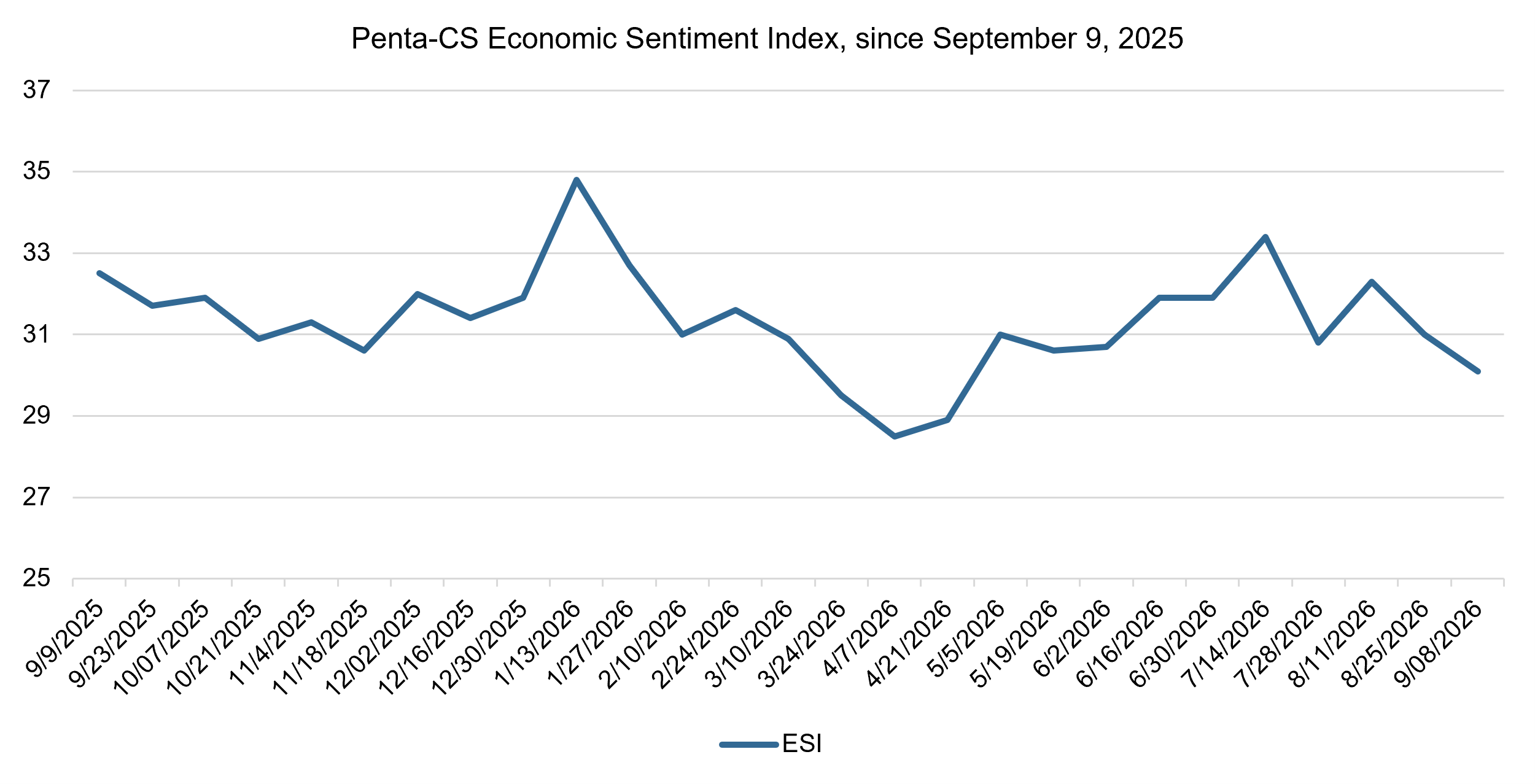
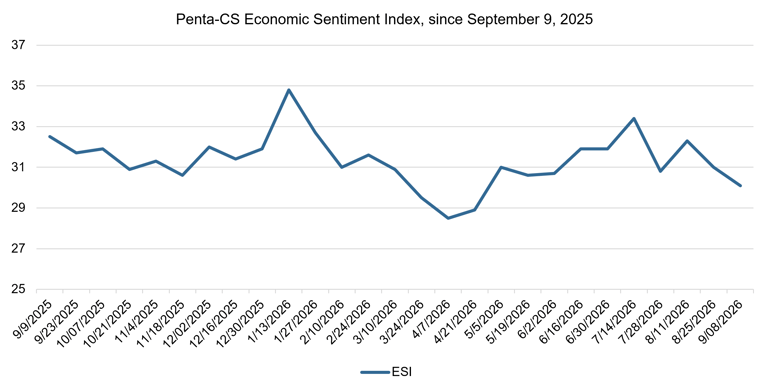
The latest biweekly reading of the Penta-CivicScience Economic Sentiment Index (ESI) decreased 0.9 points to 30.1, as consumers faced persistent inflation, rising borrowing costs, and continued uncertainty in energy markets.
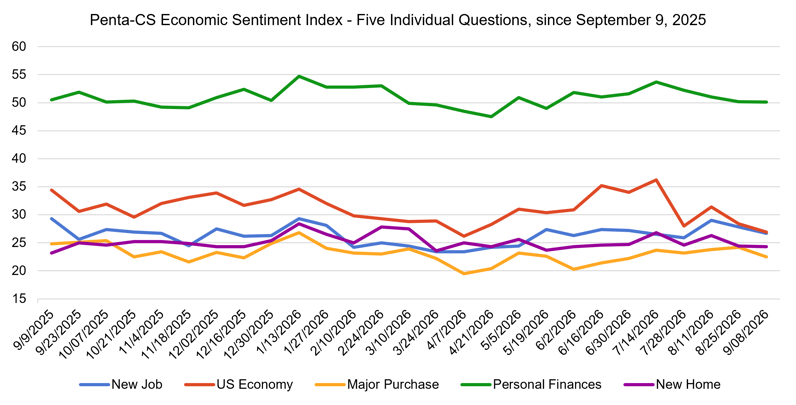
 All of the ESI's five indicators decreased during this period. Confidence in making a major purchase decreased the most, falling 1.7 points to 22.5.
—Confidence in the overall U.S. economy decreased 1.5 points to 26.9.
—Confidence in finding a new job decreased 1.1 points to 26.7.
—Confidence in buying a new home decreased 0.1 points to 24.3.
—Confidence in personal finances decreased 0.1 points to 50.1.
The Bureau of Economic Analysis (BEA) reported that the July Personal Consumption Expenditures (PCE) price index increased 0.2 percent during the month and 3.7 percent year-over-year, remaining above the Federal Reserve's 2 percent target. Core PCE, which excludes volatile food and energy prices, increased 3.3 percent annually. Meanwhile, consumer spending rose just 0.2 percent and was essentially flat after adjusting for inflation, as elevated prices continued to weigh on consumers.
At the Fed's annual Jackson Hole symposium, Fed Chair Kevin Warsh reiterated the central bank's focus on controlling inflation, stating that the Fed's "predominant focus right now should be on prices." Subsequent developments in energy markets underscored the challenge facing the Fed. Oil prices rose sharply as continued conflict between the United States and Iran raised concerns about global energy supplies. On September 8, Brent crude approached $100 for the first time since July. A sustained increase in energy prices could place additional pressure on gasoline prices and broader inflation, further complicating the Fed's interest rate decisions.
The August Jobs Report showed that employers added 162,000 jobs while the unemployment rate remained unchanged at 4.1 percent. The increase significantly exceeded economists' expectations, while June and July payroll gains were revised upward by a combined 55,000 jobs. Financial markets fell following the report as the stronger-than-expected results increased expectations for a rate hike at the Fed's September meeting.
Mortgage rates also increased during the period, adding to affordability challenges for prospective homebuyers. Freddie Mac reported that the average 30-year fixed mortgage rate rose to 6.71 percent during the week ending September 3, its highest level of 2026 and up from 6.66 percent the previous week. The increase comes as rising Treasury yields continue to push borrowing costs higher.
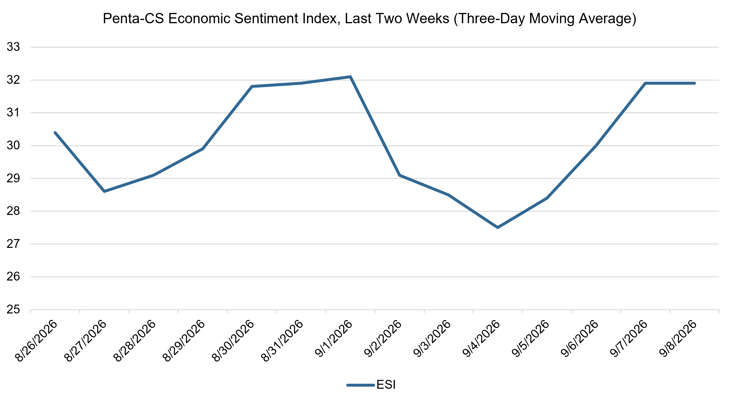
The ESI's three-day moving average followed a volatile path over the two-week period. It began at 30.4 on August 26 before falling sharply the next day to 28.6. It then rose up, reaching a high of 32.1 on September 1 before plummeting to a low of 27.5 on September 4. The three-day moving average then rose back up, reaching 31.9 on September 8 to close out the session.
The next release of the ESI will be on Wednesday, September 23, 2026.
Note: This article was updated on September 15, 2026. A system reporting error affected the underlying data, requiring an update to the headline, selected body text, and charts. The current version reflects the finalized, audited data for August 26–September 8, 2026.