.png?width=284&height=80&name=Penta_Logo_1CBD83%201%20(1).png)
 May 6, 2026
 Penta
Penta
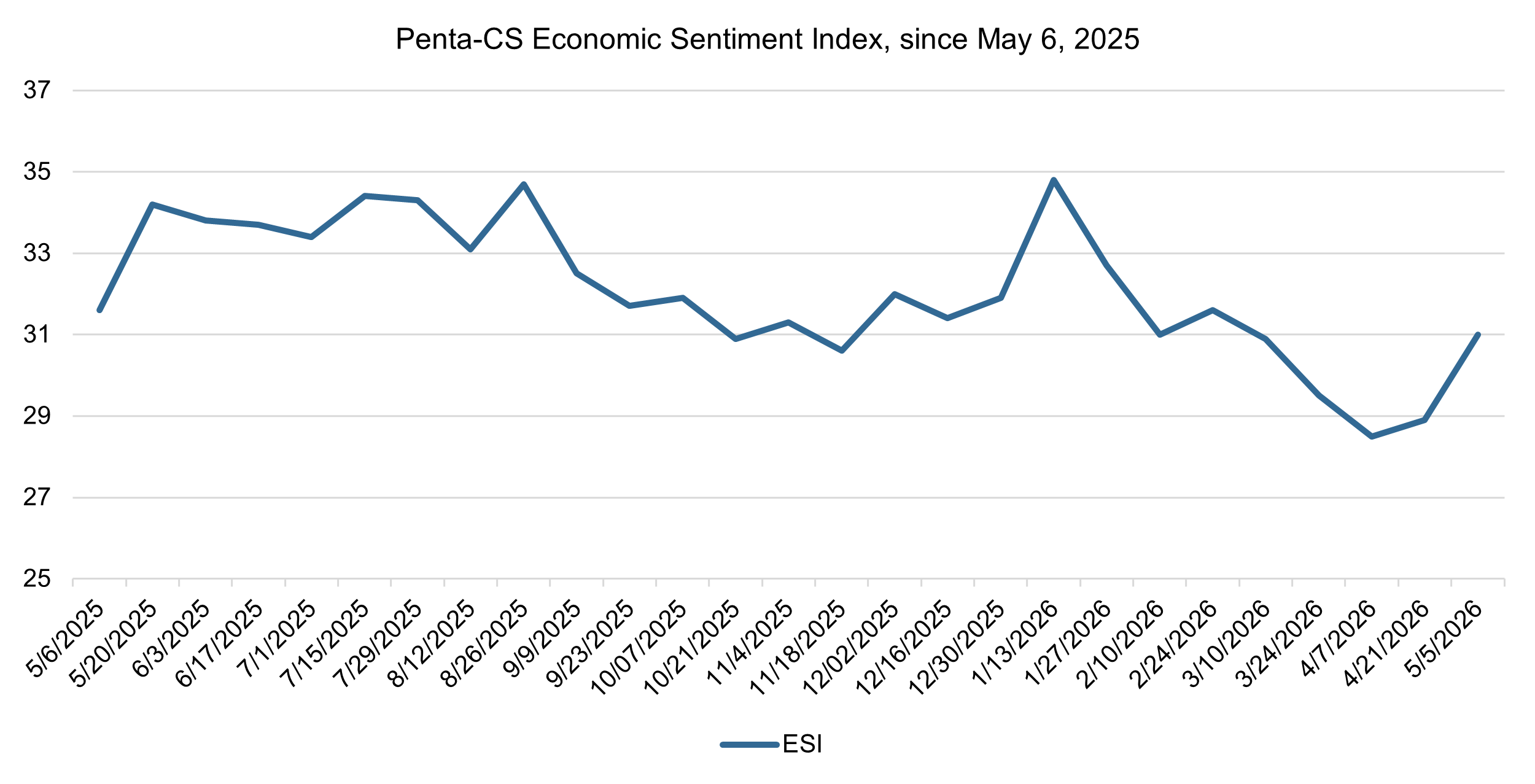
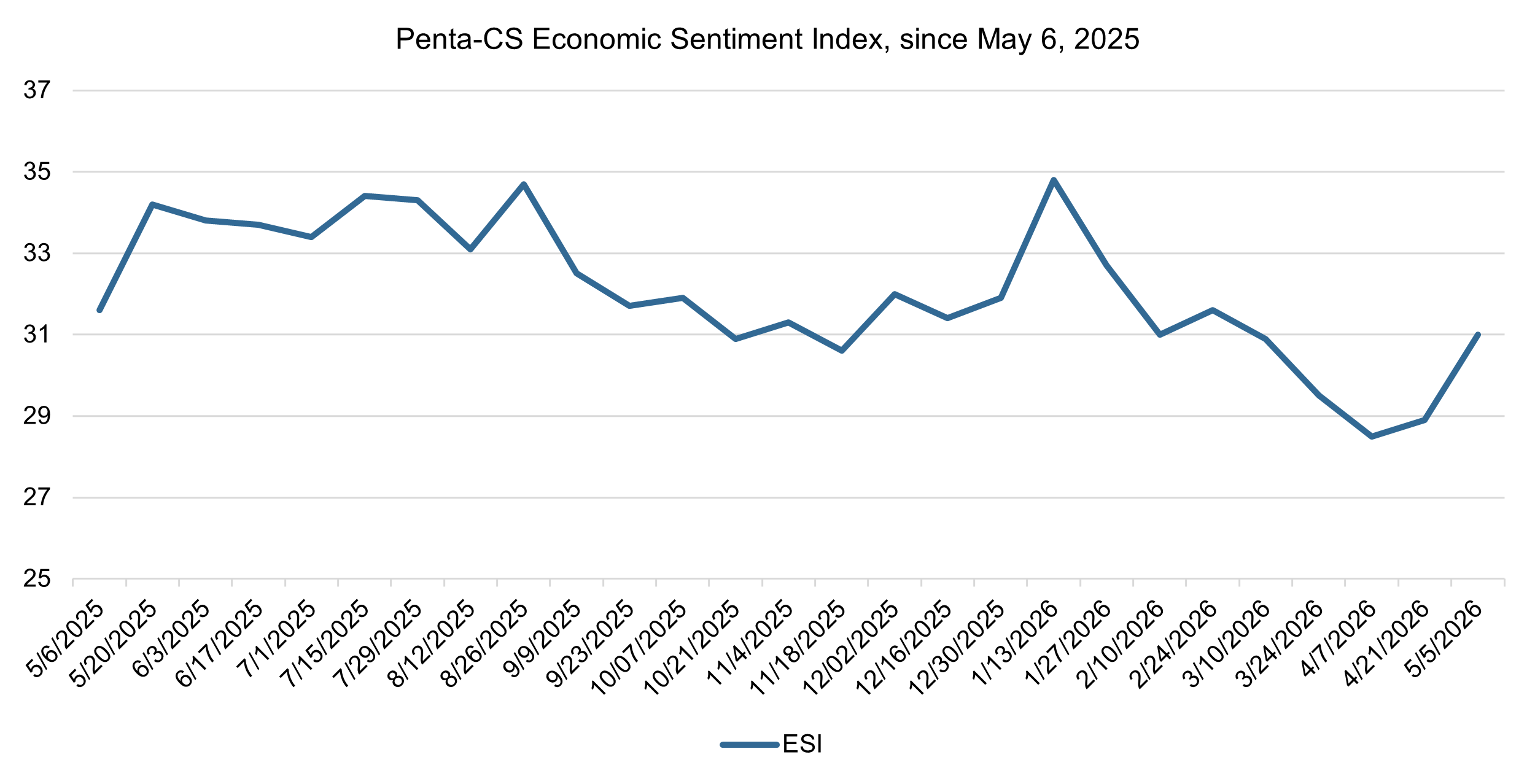
The latest biweekly reading of the Penta-CivicScience Economic Sentiment Index (ESI) increased 2.1 points, following the release of strong first-quarter GDP data, despite inflation pressures and uncertainty at the Federal Reserve.
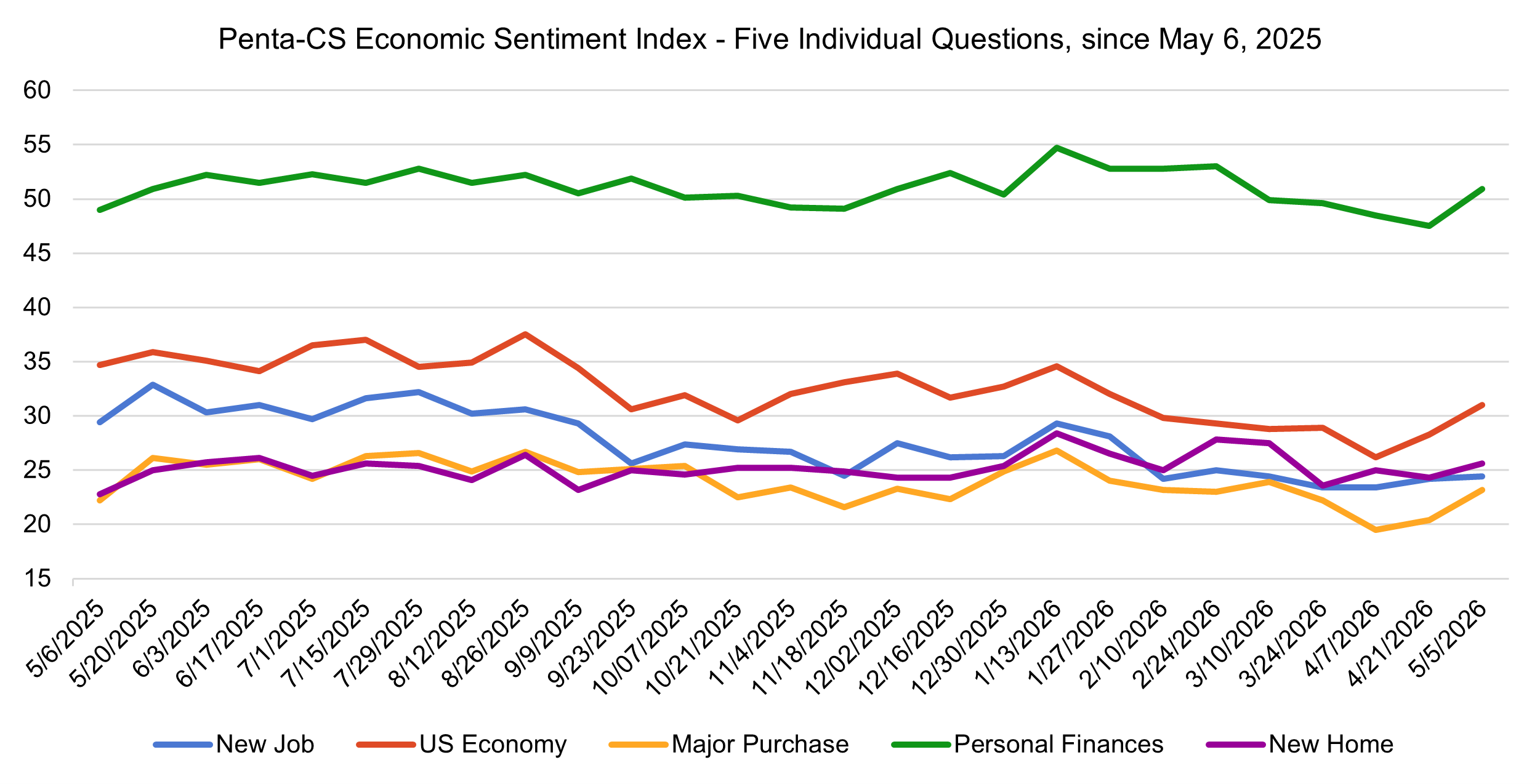
All of the ESI's five indicators increased during this period. Confidence in personal finances increased the most, rising 3.4 points to 50.9.
—Confidence in making a major purchase increased 2.8 points to 23.2.
—Confidence in the overall U.S. economy increased 2.7 points to 31.0.
—Confidence in buying a new home increased 1.3 points to 25.6.
—Confidence in finding a new job increased 0.2 points to 24.4.
The Bureau of Economic Analysis' advance estimate of real GDP showed that the U.S. economy grew at a 2 percent annual rate in the first quarter of 2026, up from 0.5 percent in Q4 2025. Business investment rose at a 10.4 percent annual pace during the quarter as spending increased across AI-related categories. Consumer spending grew more modestly at a 1.6 percent rate, easing from 1.9 percent in the prior quarter.
The Fed held the federal-funds rate steady at a range of 3.5 to 3.75 percent following an 8–4 vote at the April meeting of the Federal Open Markets Committee (FOMC). Governor Stephen Miran dissented in favor of a cut, while three regional Fed bank presidents opposed the decision due to language in the statement signaling a possible future rate cut, arguing instead that the next move could be either a hike or a cut. The statement cited "a high level of uncertainty about the economic outlook" tied to developments in the Middle East and noted that inflation remains elevated, "in part reflecting the recent increase in global energy prices."
Prices rose 0.3 percent from February to March and 3.2 percent year-over-year according to the core personal consumption expenditures (PCE) price index, the Fed's preferred inflation gauge. Meanwhile, consumer spending increased by more than $195 billion during the month, fueled by spending on gasoline and energy goods. With energy prices rising amid the conflict in the Middle East, these pressures are likely to keep inflation elevated and continue to complicate the Fed's path forward on interest rates.
Lastly, new home sales reached their fastest pace of the year in March, climbing to a 682,000 annualized rate, outpacing analyst predictions, as the median selling price decreased to a more than four-year low. That marks a 7.4 percent increase from February, reflecting notable month-over-month gain in single-family home sales. This increase is likely a signal of renewed momentum in the housing market despite ongoing affordability pressures, including an increase in mortgage rate from a recent low at the end of February.
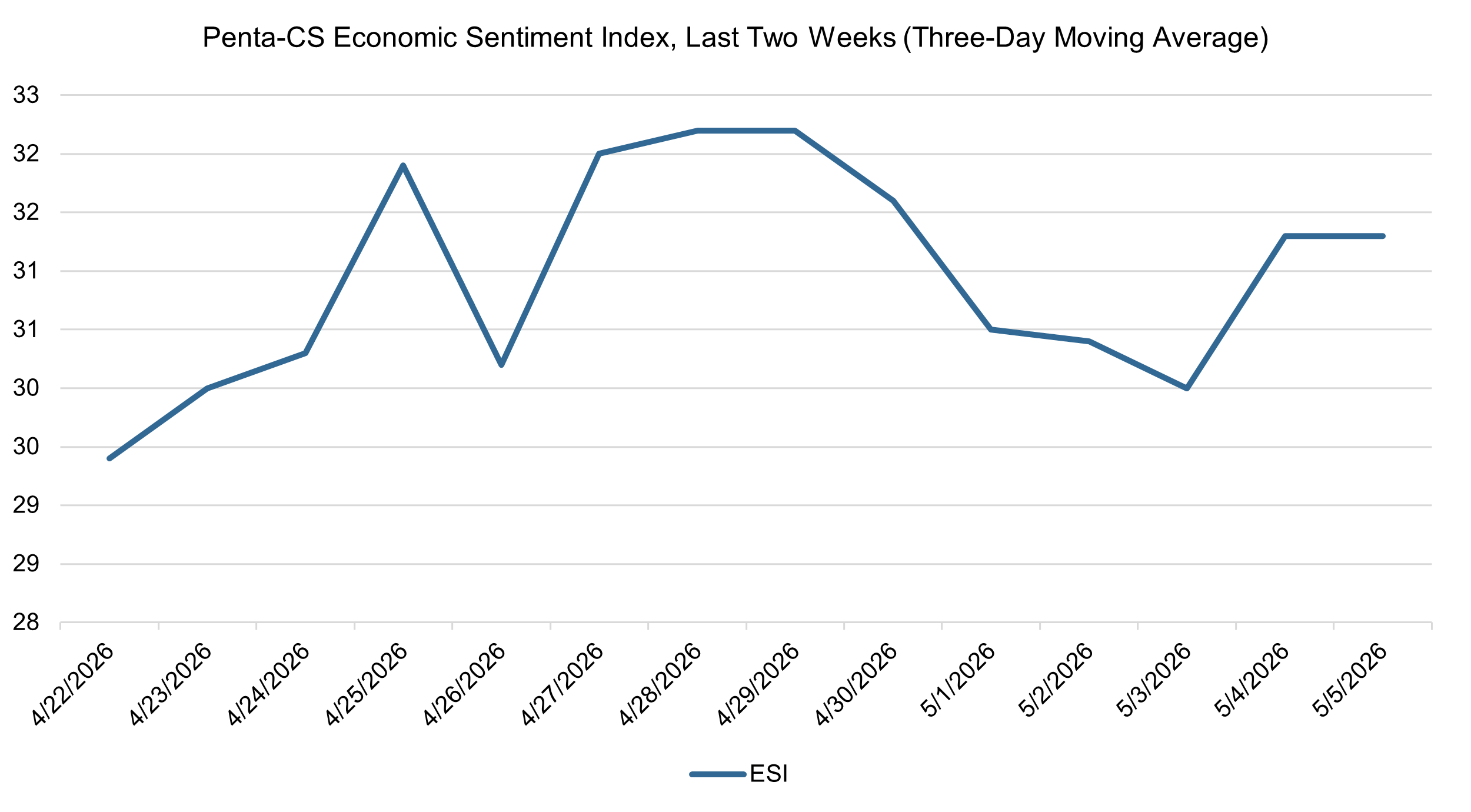
This period, the ESI’s three-day moving average saw sentiment ebb and flow, though it remained bounded between about 29 and 33 throughout the period. The three-day moving average started this two-week period at a low of 29.4 on April 22. It then rose to 31.9 on April 25 before decreasing to 30.2 the next day. The three-day moving average then rose to a high of 32.2 on April 28, held steady through April 29, then fell to 30.0 on May 3 before rebounding to 31.3 on May 5 to close the session.
The next release of the ESI will be on Wednesday, May 20, 2026.