.png?width=284&height=80&name=Penta_Logo_1CBD83%201%20(1).png)
 August 12, 2026
 Penta
Penta
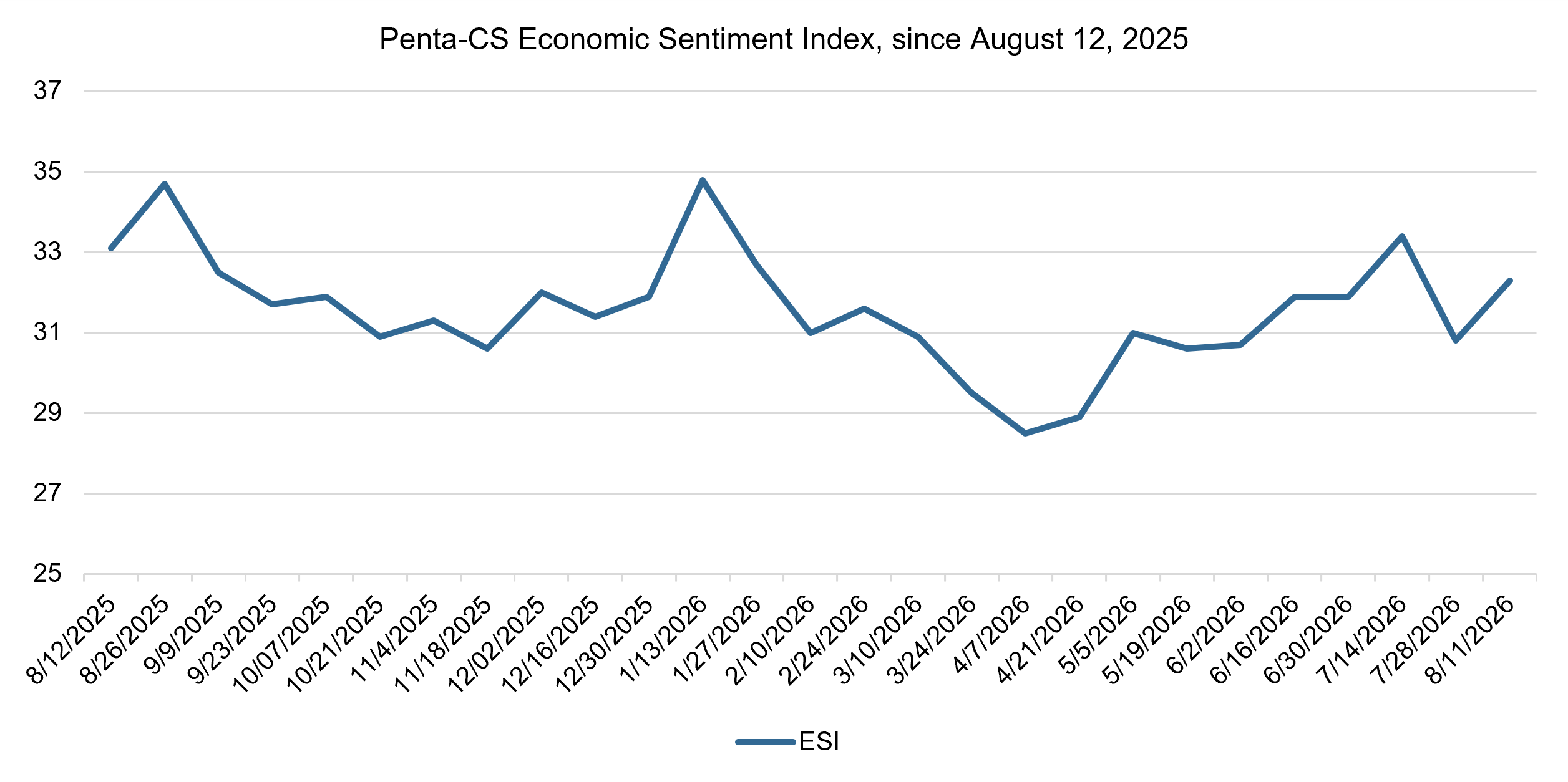
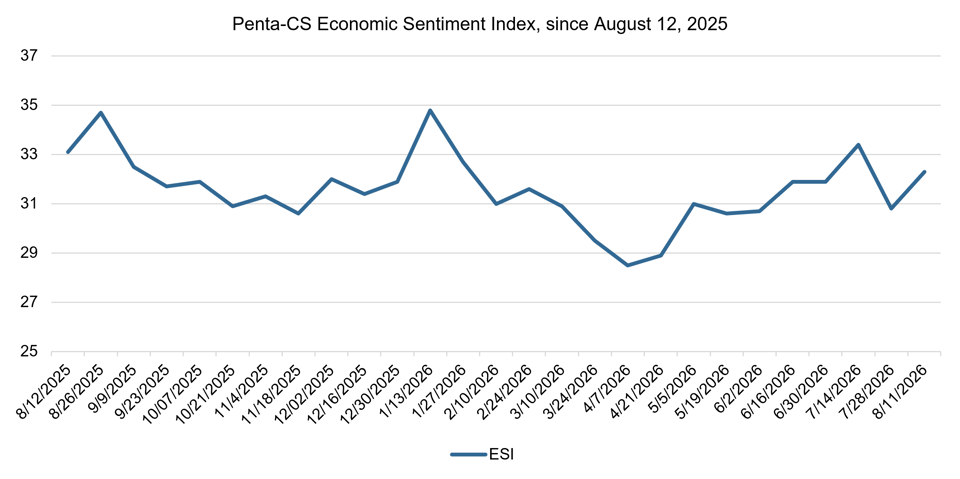
The latest biweekly reading of the Penta-CivicScience Economic Sentiment Index (ESI) increased 1.5 points to 32.3—partially reversing the decline in the previous period—despite persistent inflation and signs of a weakening labor market.
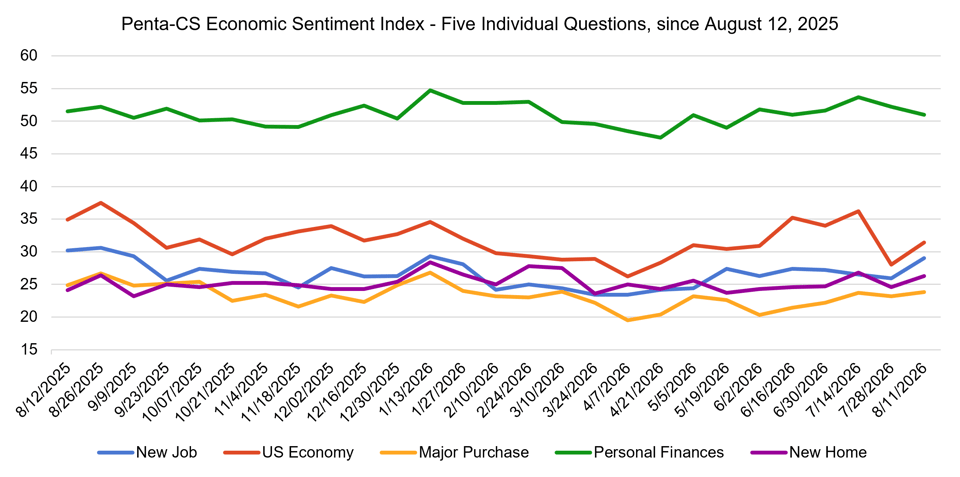
 Four of the ESI's five indicators increased during this period. Confidence in the overall U.S. economy increased the most, rising 3.4 points to 31.4.
—Confidence in finding a new job increased 3.1 points to 29.0.
—Confidence in buying a new home increased 1.7 points to 26.3.
—Confidence in making a major purchase increased 0.6 points to 23.8.
—Confidence in personal finances decreased 1.2 points to 51.0.
 The Bureau of Economic Analysis' (BEA) June Personal Consumption Expenditures (PCE) price index showed that the U.S. inflation rate increased 3.7 percent year-over-year, down from a 4.1 percent annual increase in May. Core PCE, which excludes volatile food and energy prices, increased 3.3 percent year-over-year. While the annual rate of inflation has slowed since May, inflation continues to run above the Fed's 2 percent target, and this decline could prove temporary if renewed conflict in the Middle East continues to place upward pressure on energy prices.
The Bureau of Labor Statistics reported that the economy shed 23,000 jobs in July, while the unemployment rate declined slightly to 4.1 percent. May and June payroll gains were also revised downward by a combined 103,000 jobs, adding to evidence of a slowdown in hiring even as job growth remained positive for both months after revision. Financial markets surged following the report's release, as the weaker-than-expected results decreased the likelihood of a rate increase at the Fed's September meeting.
The Federal Reserve held the federal funds rate steady at 3.5 to 3.75 percent at its July meeting. The decision passed by a 9–3 vote, with Federal Open Markets Committee (FOMC) participants Beth Hammack, Neel Kashkari, and Lorie Logan favoring a 0.25-percentage-point rate increase. The unusually divided vote underscored growing disagreement within the FOMC over whether elevated inflation warrants additional monetary tightening, particularly as energy-related price pressures continue to be a concern.
BEA released its initial estimate for gross domestic product (GDP) for the second quarter of 2026 which indicated slowing U.S. economic growth, with GDP increasing at an annual rate of 1.5 percent, down from 2.1 percent in the first quarter. This came in slightly-below economists' predictions of a 1.8 percent gain. The slower pace of growth reflects the economic strain imposed by the conflict in the Middle East, even as core GDP, which includes only consumer spending and gross private investment, surged 3.9 percent, fueled by the artificial intelligence boom.
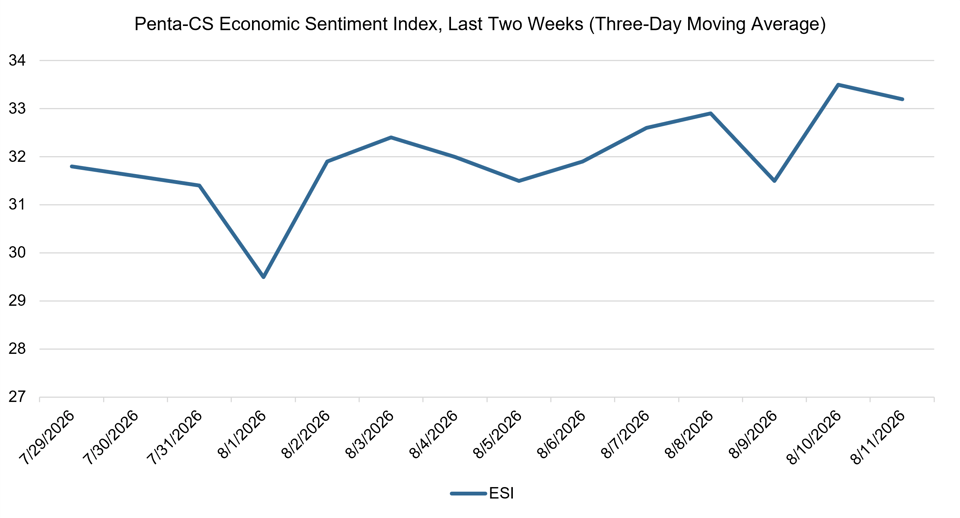 The ESI's three-day moving average followed a volatile but ultimately upward path over the two-week period. It began at 31.8 on July 29 and then fell to a low of 29.5 on August 1 before rebounding to 32.4 on August 3. It then fluctuated over the following days but maintained an upward trend, climbing to a peak of 33.5 on August 10 before edging down to 33.2 on August 11 to close out the session
The next release of the ESI will be on Wednesday, August 26, 2026.