.png?width=284&height=80&name=Penta_Logo_1CBD83%201%20(1).png)
 July 23, 2026
 Penta
Penta
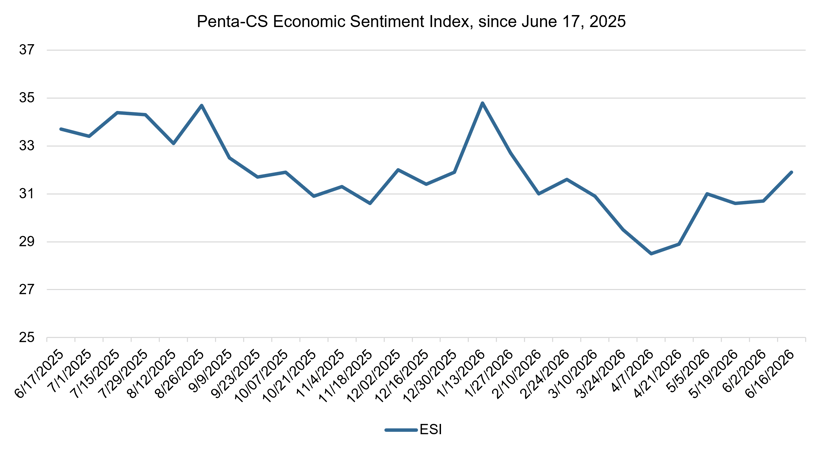
The latest biweekly reading of the Penta-CivicScience Economic Sentiment Index (ESI) increased by 1.2 points to 31.9 ahead of the June FOMC meeting, following a better-than-expected jobs report and news of a deal between the U.S. and Iran to extend the ceasefire in the Middle East.
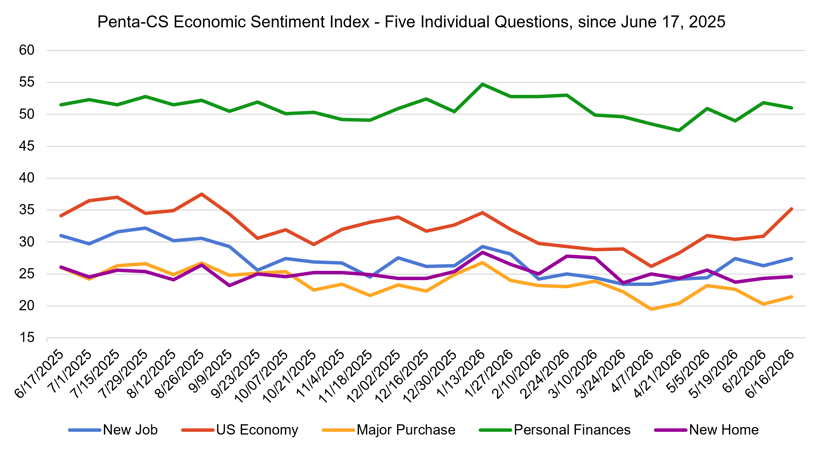
Four of the ESI's five indicators increased during this period. Confidence in the overall U.S. economy increased the most, rising 4.3 points to 35.2.
—Confidence in finding a new job increased 1.1 points to 27.4.
—Confidence in making a major purchase increased 1.1 points to 21.4.
—Confidence in buying a new home increased 0.3 points to 24.6.
—Confidence in personal finances decreased 0.8 points to 51.0.
The May Jobs Report showed that total nonfarm payroll employment sharply increased by 172,000 jobs while the unemployment rate held steady at 4.3 percent. The increase exceeded expectations and included upward revisions to March and April payrolls, signaling continued resilience in the labor market even as consumers and businesses navigated elevated prices, geopolitical uncertainty, and expectations for continued monetary policy pressure.
The Bureau of Labor Statistics (BLS) reported that the Consumer Price Index for May rose 4.2 percent from a year earlier, up from 3.8 percent in April, marking the highest annual inflation rate since April 2023. Much of the increase was driven by higher energy prices, which continued to reflect market pressure from the conflict in the Middle East and disruption around the Strait of Hormuz. Core inflation remained more contained, rising 2.9 percent annually, but the headline increase reinforced concerns that inflation could remain elevated heading into the June meeting of the Federal Open Markets Committee (FOMC).
Major stock indexes experienced sharp swings during the period as investors reacted to the jobs report, inflation data, and developments in the Middle East. Following the jobs report, stocks fell as markets reassessed the likelihood of higher-for-longer interest rates, with technology and AI-related stocks among the hardest hit. Markets then faced additional volatility after the CPI report reinforced concerns about energy-driven inflation. However, stocks rebounded sharply later following news that the U.S. and Iran had reached a deal to extend the ceasefire and lead to reopening the Strait of Hormuz.
These developments came ahead of the June FOMC meeting, the first under new Federal Reserve Chair Kevin Warsh. With labor market data remaining resilient, inflation moving higher, and energy markets still sensitive to developments in the Middle East, analysts generally expected the Fed to leave interest rates unchanged while signaling continued concern about inflation risks.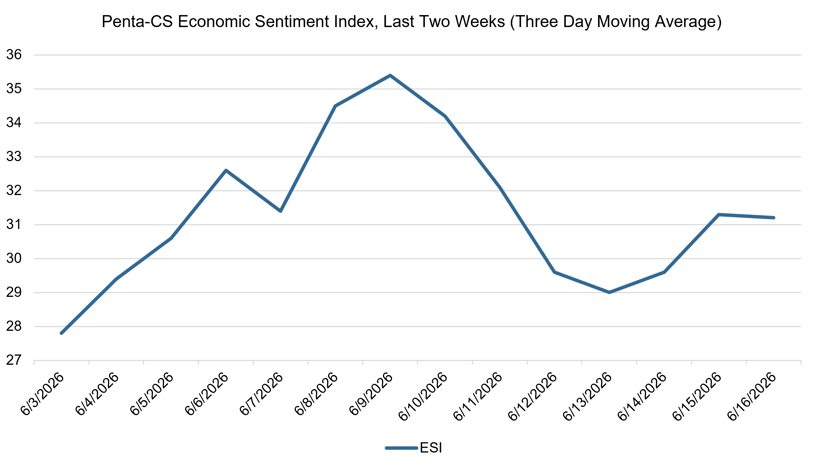
The ESI's three-day moving average began the two-week stretch at a period low of 27.8 on June 3. It then increased to 32.6 on June 6 before dipping slightly to 31.4 on June 7. The three-day moving average then climbed to a period high of 35.4 on June 9 before declining to 29.0 on June 13. It then rose again to 31.3 on June 15 before falling slightly to 31.2 on June 16 to close out the session.
The next release of the ESI will be on Wednesday, July 1, 2026.